Google Partner Summit APAC 2026: A Look at Google Intelligent Endpoints

For years, enterprise IT teams have treated devices, browsers, security, and productivity tools as separate parts of their technology infrastructure. That distinction is becoming harder to maintain as AI moves into everyday workflows.
At Google Partner Summit APAC 2026 in Singapore, the conversation reflected this changing reality.
Presented by Chrome Enterprise and Google for Education, the summit brought together technology partners and leaders from across the Asia-Pacific region to explore the future of enterprise computing, security, and connected digital experiences.
Among the discussions, two stood out: Robert DeVito’s insights into Gemini 4 Carbon and Sean Ginevan’s perspective on Android’s expanding role in enterprise technology.
Together with Google’s broader Google Intelligent Endpoints vision, these conversations point toward an important shift: the future of work is increasingly being shaped by intelligence embedded directly into the devices, browsers, and platforms employees already use.


From Managed Devices to Google Intelligent Endpoints
Traditional endpoint management focuses on keeping devices updated, configured, and secure.
But what happens when those devices can also understand context, assist with workflows, and help employees complete tasks?
That question sits at the center of Google’s evolving enterprise strategy.
In September 2026, Google introduced its broader Google Intelligent Endpoints vision , connecting enterprise browsers, operating systems, and hardware through integrated AI capabilities and security controls.
David Still, Vice President of Product and Engineering for Android Enterprise, and Mark Berschadski, Director of Product Management for Chrome Enterprise and Security, outlined this direction in Google’s official announcement.
The concept goes beyond adding AI features to existing devices.
Google Intelligent Endpoints represents a more connected approach to enterprise computing, where intelligence can operate across applications, enterprise policies can follow employees between platforms, and organizations can maintain visibility as automated workflows become more common.
For IT leaders, this changes the conversation from simply managing devices to managing how work happens across them.
It also brings Chrome Enterprise, Android Enterprise, and AI-powered capabilities into a broader discussion about creating secure, connected, and productive working environments.
Robert DeVito Highlights Gemini 4 Carbon’s Cybersecurity Potential

One of the notable discussions at the Singapore summit came from Robert DeVito, who shared insights into Gemini 4 Carbon, Google’s frontier AI model designed for demanding cybersecurity and long-horizon tasks.
Google officially introduced Gemini 4 Carbon on October 28, 2026, outlining improvements in software engineering, vulnerability discovery, and complex reasoning.
The published benchmark results offer a closer look at its capabilities:
- 88.2% on SEC-bench Pro, evaluating vulnerability discovery.
- 54.8% on ExploitGym, assessing the ability to validate vulnerabilities through exploitation.
- 71.0% on CWE-bench, evaluating vulnerability remediation.
These are Google’s reported results from specified evaluations, not guarantees of performance in every enterprise environment.
What makes Carbon particularly interesting is its ability to work through difficult, multi-step engineering problems over extended periods.
Google reports that its internal teams have used the model to investigate and address complex bugs across large codebases, sometimes running workflows for days.
For cybersecurity teams, this could eventually support a more continuous approach to identifying, validating, and resolving software vulnerabilities.
There is an important distinction, however, between technical capability and enterprise availability.
Google has initially limited Carbon’s rollout to selected cybersecurity defenders and trusted partners while continuing its safety evaluations.
The larger implication is clear: AI is progressing from assisting security analysts toward handling more substantial parts of the security engineering process.
As organizations move toward intelligent endpoints and AI-enabled workflows, developments like Carbon also highlight the growing importance of stronger security capabilities behind the systems employees depend on.
Sean Ginevan: Android’s Enterprise Role Is Expanding

Another important perspective came from Sean Ginevan, Head of Global Technology Partnerships at Android Enterprise.
His discussion highlighted Android’s evolution beyond smartphones and tablets into a broader ecosystem of connected enterprise devices.
This direction is particularly relevant as organizations adopt more varied hardware for frontline workers, hybrid employees, and specialized operational environments.
Google’s September 2026 Android Enterprise updates provide additional context.
Among the developments are expanded management capabilities for Android XR devices, improved desktop experiences on supported Android hardware, and enterprise controls for AI-powered automation.
These developments also align with the direction of Google Intelligent Endpoints, where different device categories become part of a more connected and manageable enterprise environment.
Organizations can increasingly consider connected devices as part of a shared working environment rather than isolated hardware categories.
For example, an employee might begin a task on a mobile device, continue it through a larger workstation experience, and access enterprise applications under consistent management policies.
The technology is changing, but the underlying business requirement remains familiar: employees need flexibility without creating additional security and administration challenges.
As Android expands across device categories, interoperability and centralized governance become increasingly important.
Chrome Enterprise: Security Where Modern Work Actually Happens
The browser has become one of the most important enterprise workspaces.
Employees authenticate into applications, handle confidential information, collaborate with colleagues, and increasingly interact with AI tools through browser-based interfaces.
This makes browser security especially relevant to the Google Intelligent Endpoints conversation.
Chrome Enterprise Premium addresses this through capabilities such as data loss prevention, context-aware access controls, and protection against malicious websites and downloads.
Google has also expanded browser-based controls for AI-related activity, helping organizations understand the tools employees access and apply policies to sensitive information.
Consider an employee copying confidential customer information into an unapproved AI application.
Traditional device management alone may not provide the controls needed at the point where that information is transferred.
Browser-level protections offer another opportunity to enforce organizational policies closer to the actual activity.
As AI agents begin interacting with enterprise applications, these controls become even more relevant.
Within a Google Intelligent Endpoints strategy, the browser plays an important role in connecting productivity with security. It provides a place where organizations can support modern working experiences while maintaining control over how enterprise data is accessed and used.
The question is no longer just whether a device is secure. It is whether the actions performed through that device remain visible, authorized, and appropriately governed.
Google for Education: Making AI Useful Without Losing Control
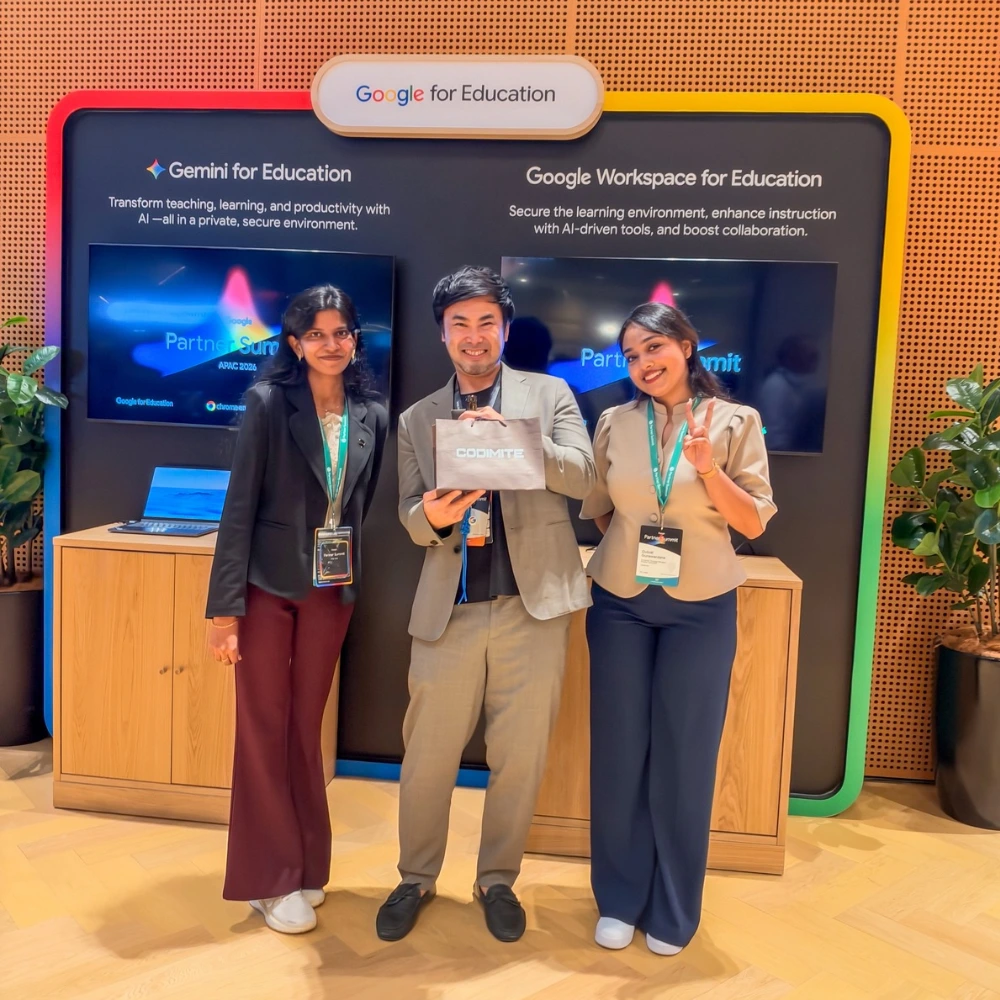

Education adds another dimension to the intelligent endpoint discussion.
Schools and universities face many of the same technology challenges as enterprises, but with additional responsibilities around student safety, accessibility, learning outcomes, and device administration.
Google for Education’s involvement in the summit reflects the importance of these requirements.
Just days before the event, Google announced new AI learning capabilities on November 3, 2026.
The updates included Guided Learning capabilities for Google Classroom and Google Search, alongside changes to administrative controls for AI products used by K–12 students.
The emphasis is meaningful.
Rather than positioning AI simply as a way to generate answers, Google is developing experiences intended to guide students through problems and support learning.
For educational institutions, adopting these technologies requires more than selecting devices or enabling new applications.
Administrators must consider how technology is managed, which AI experiences are appropriate for different learners, and how educators can use these capabilities effectively.
The broader Google Intelligent Endpoints vision is relevant here as well. As AI becomes more closely connected with educational devices and applications, schools need reliable ways to manage access, protect users, and maintain consistent digital learning environments.
Intelligent endpoints in education will ultimately be judged by their contribution to teaching and learning, not merely by the number of AI features available.
What Google Partner Summit APAC 2026 Means for Enterprise IT
The developments discussed around the Singapore summit point to a broader transition in enterprise computing.
Google Intelligent Endpoints reflects a shift toward bringing AI capabilities, endpoint security, and device management closer together, rather than treating them as separate technology priorities.
AI capabilities are advancing rapidly, but organizations still need practical foundations to deploy them responsibly.
For enterprise technology leaders, three questions deserve particular attention.
Are existing endpoints ready for AI-enabled workflows?
Device compatibility, operating system readiness, application dependencies, and security configurations can all affect adoption.
Can security policies keep pace with AI-powered activity?
As employees and automated agents interact with more applications, organizations need appropriate visibility and controls across browsers, devices, and data.
Can different platforms work together without increasing management complexity?
Enterprise mobility now extends across laptops, smartphones, specialized devices, and emerging computing environments.
These challenges make technology readiness increasingly important.
An organization may have a clear AI strategy but still struggle to execute it because of unmanaged endpoints, legacy application dependencies, or inconsistent security policies.
The next stage of enterprise transformation will depend as much on understanding these existing environments as it does on adopting new technologies.
Turning Enterprise Readiness Into Progress
For Codimite, participating in Google Partner Summit APAC 2026 provided an opportunity to connect with Google’s Chrome Enterprise, Android, and education ecosystems and explore how developments such as Google Intelligent Endpoints relate to real enterprise requirements.
As a Google Cloud Partner and Chrome Service Partner, Codimite works across Google enterprise services , including endpoint readiness assessments, Chrome Enterprise Premium deployments, ChromeOS adoption, and education technology enablement.
These areas share a practical starting point: understanding an organization’s current environment before deciding what should change.
As Google advances its intelligent endpoint vision, this kind of readiness becomes increasingly relevant. Organizations need to understand their existing devices, applications, security configurations, and workflows before introducing more connected and AI-enabled working experiences.
Google Partner Summit APAC 2026 reinforced an important direction for the industry. Google Intelligent Endpoints represents part of a broader move toward more intelligent, secure, and interconnected enterprise technology, but its long-term value will depend on how securely, thoughtfully, and effectively organizations put it to work.